Chicken Saltimbocca
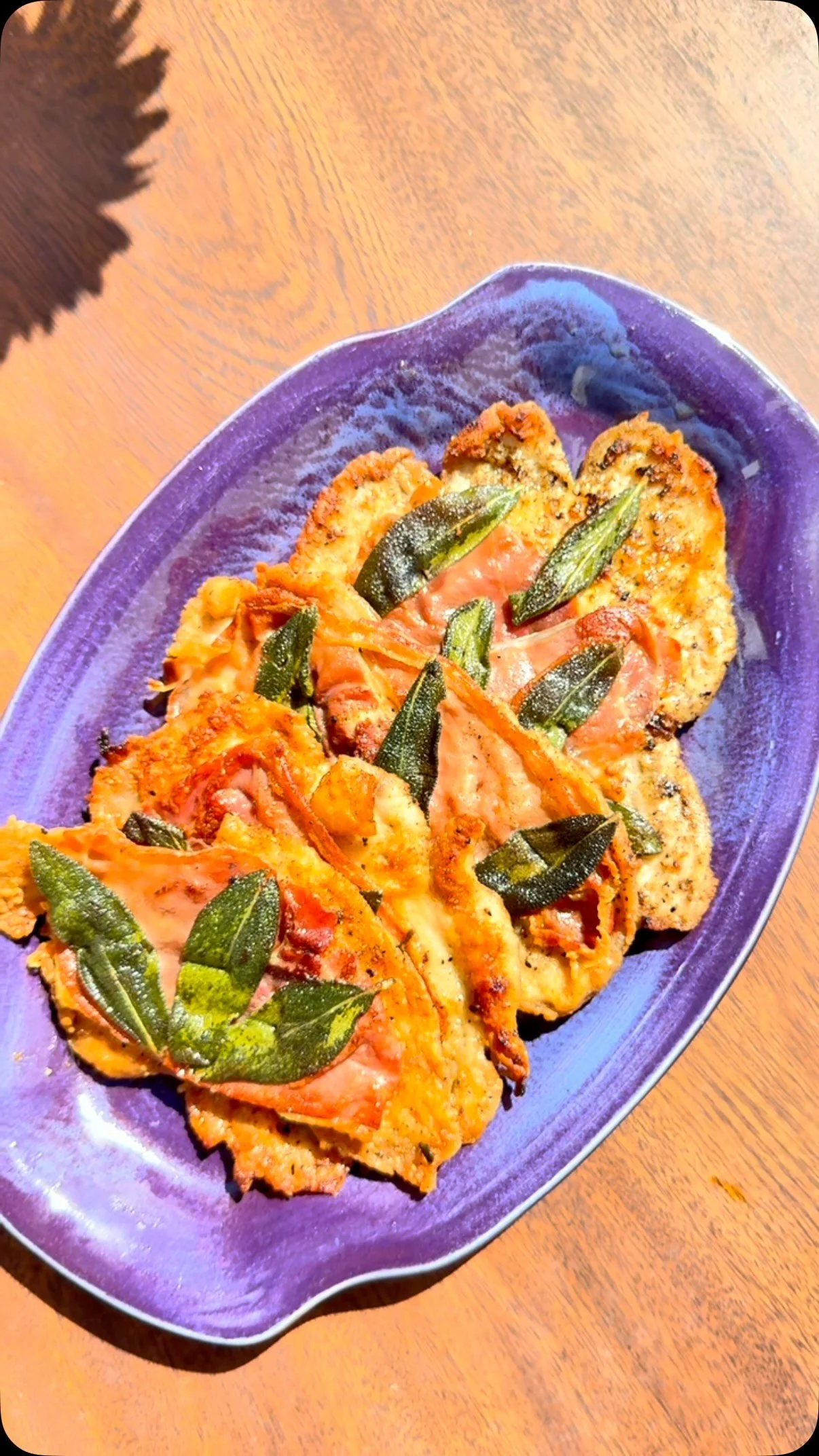
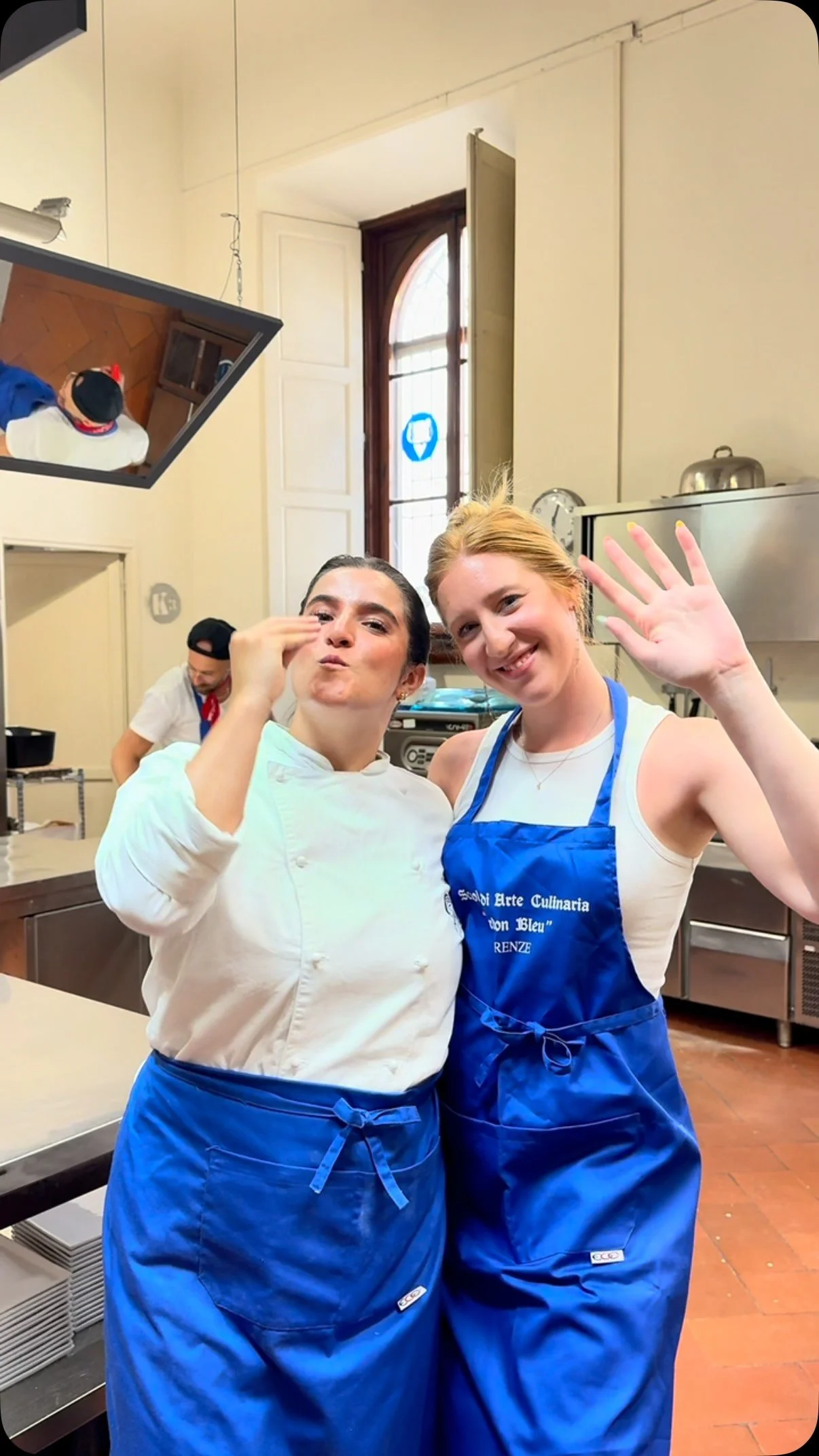
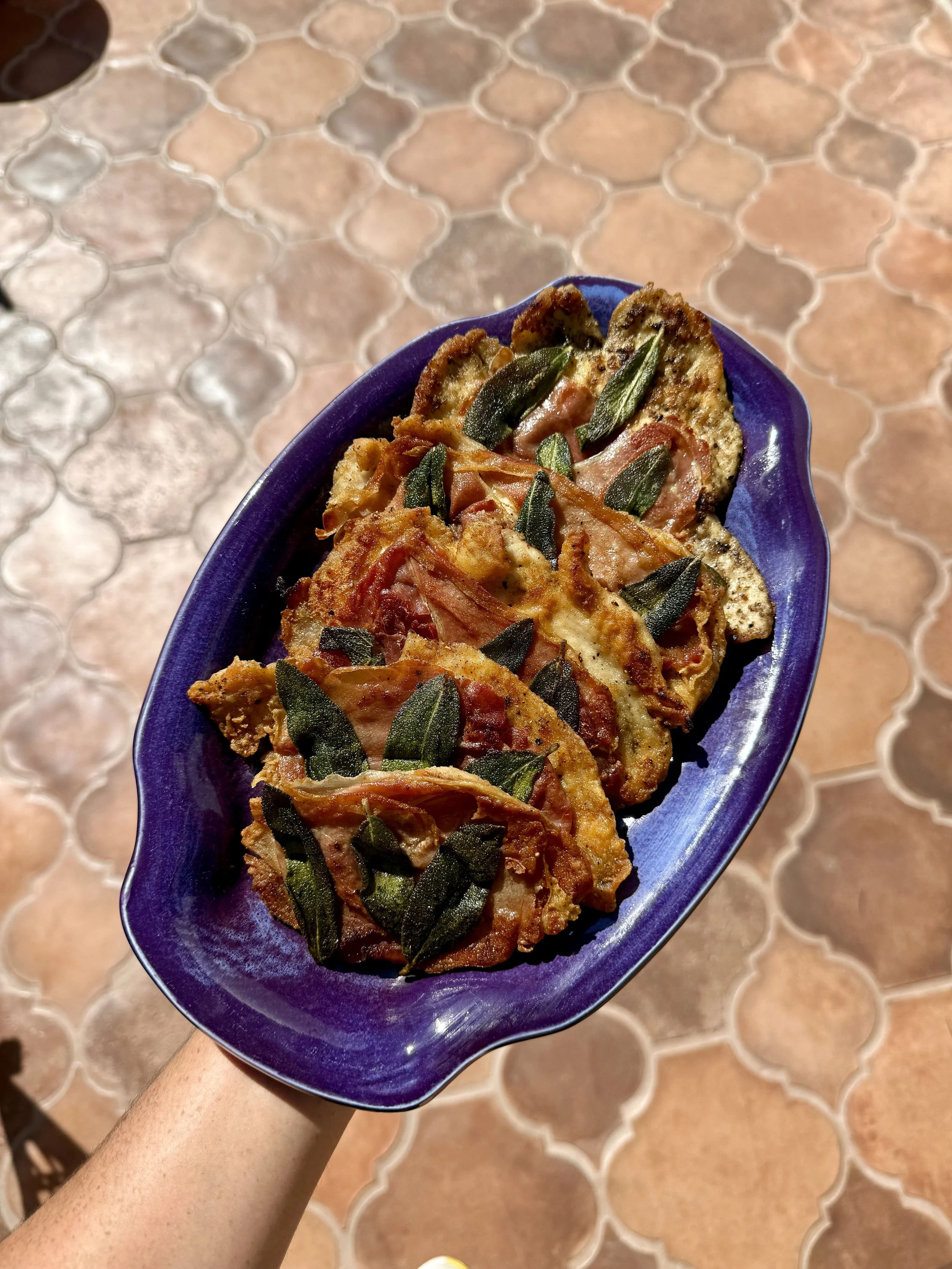
Chicken Saltimbocca is one of those dishes that feels a little fancy but is surprisingly simple to make at home. I learned how to make traditional veal saltimbocca during my first year of culinary school in Italy, and it quickly became one of those dishes I knew I wanted to recreate once I got home. The name saltimbocca translates to “jump in the mouth” in Italian—which honestly makes perfect sense because it’s THAT good.
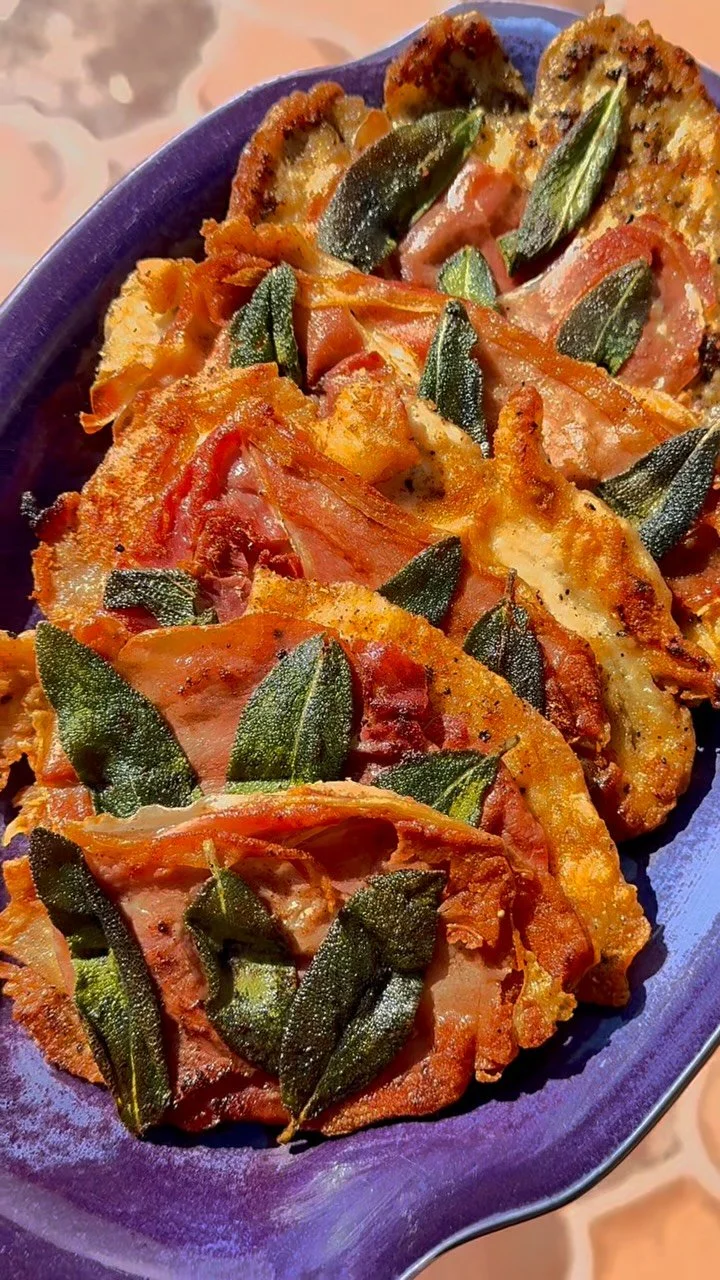
For my version, I swapped the veal for approachable chicken cutlets and kept all those classic flavors I loved: salty prosciutto, fresh sage, a golden pan-seared crust, and a simple white wine sauce finished with fresh lemon and good olive oil. It’s savory, bright, and proof that you don’t need to overcomplicate dinner to make something seriously delicious. Let’s get cookin’!
INGREDIENTS
4 thin-sliced chicken breasts, about 1-1 ¼ lbs total
Kosher salt, to taste
Freshly ground black pepper, to taste
8 fresh sage leaves, about 2-3 sage leaves per chicken breast
Thin slices of prosciutto, one slice for each chicken breast
½ cup all-purpose flour, for dredging
2 tablespoons extra-virgin olive oil
2 tablespoons unsalted butter, divided
½ cup dry white wine
½ cup chicken broth
Juice of ½ a lemon, plus more to taste
Extra-virgin olive oil, for finishing/serving
Instructions
Prep the chicken
Place the chicken cutlets between two pieces of parchment paper or plastic wrap and gently pound them to an even thickness. Season lightly with salt and black pepper — remember, the prosciutto will add plenty of salt.Lightly flour the chicken
Lightly dredge each piece in flour, shaking off any excess. You only want a thin coating.Add the sage and proscuitto
Place a thin slice of prosciutto and 2-3 fresh sage leaves on each piece of chicken and fasten with toothpicks.Sear the chicken
Heat the olive oil and 1 tablespoon of butter in a large skillet over medium-high heat. Once hot, add the chicken prosciutto-side down. Cook without moving it for about 2–3 minutes, until the prosciutto is crisp and the chicken has developed good color.Flip and finish cooking
Flip the chicken and cook for another 2–3 minutes, or until golden and the chicken reaches an internal temperature of 165°F. Transfer to a plate and set aside.Make the pan sauce
Lower the heat slightly and pour the white wine into the same skillet. Use a wooden spoon to scrape up all of those flavorful browned bits from the bottom of the pan. Let the wine reduce for 1–2 minutes.Add the broth
Pour in the chicken broth and simmer for another 2–3 minutes, allowing the sauce to reduce slightly. Stir in the remaining butter until melted and the sauce looks glossy.Finish and serve
Reduce the heat to low. Add fresh lemon juice and a drizzle of good extra-virgin olive oil. Taste and adjust with additional lemon or black pepper as needed. Return the chicken to the skillet and spoon the sauce over the top just long enough to warm everything through. Serve immediately with the prosciutto and sage facing up, finishing with another squeeze of fresh lemon and drizzle of extra-virgin olive oil if desired.
Jo’s Tips
Jo’s Tips
Go easy on the salt. Prosciutto is already quite salty, and your sauce will reduce and concentrate as it cooks. Season the chicken lightly at the beginning, then taste the finished sauce before adding any more salt.
Don’t move the chicken too soon. Let it sit in the pan and develop a proper sear before flipping. If it’s sticking, give it another 30 seconds — it will usually release naturally once it has developed a crust.
Keep the flour coating light. You’re not breading the chicken! A very thin dusting is all you need to help with browning and give the pan sauce a little body. Shake off any excess before it hits the skillet.
Watch your heat once you start the sauce. Those browned bits left behind from the chicken are where so much of the flavor comes from, but they can turn bitter if they burn. Lower the heat before adding your wine to deglaze.
Add the lemon at the end. Cooking lemon juice for too long can make the sauce taste harsh or bitter. I like adding fresh lemon once the sauce has reduced, along with a drizzle of good extra-virgin olive oil, for a fresher, brighter finish.
Don’t drown the chicken in sauce. Saltimbocca is all about the chicken, prosciutto, and sage. The pan sauce should complement those flavors rather than completely cover them.
STORAGE & REHEATING
To store: Let the chicken cool completely, then transfer it to an airtight container with any leftover pan sauce. Refrigerate for up to 3–4 days.
To reheat: For the best texture, gently reheat the chicken and sauce in a covered skillet over medium-low heat. Add a small splash of chicken broth or water if the sauce has thickened too much. Heat just until warmed through to avoid drying out the chicken.
You can also microwave individual portions in 30-second intervals, but the prosciutto will lose some of its crispness.
Jo’s Tip: Chicken saltimbocca is best served fresh! If you know you’ll have leftovers, store any extra pan sauce with the chicken to help keep it moist when reheating.
Follow @injoskitchen on Instagram to watch recipes come to life!